If your business is anywhere near a river, a low-lying area, or a coastal zone in Australia, flooding is not a question of “if” — it’s a question of “when.”
The 2022 floods across South-East Queensland and Northern NSW were the most expensive flood disaster in Australian history. Then, in early 2025, Queensland flooded again. Thousands of businesses were caught off guard, watching stock, equipment, and trading days disappear underwater.
Here’s the thing — a lot of that damage could have been reduced, not with luck, but with the right planning.
That’s exactly what flood mitigation consultants do. They’re the professionals who look at your property, understand your flood risk, and help you do something about it before the water arrives — not after.
This guide explains what flood mitigation consulting is, what these specialists actually do for Australian businesses, and why getting one involved sooner rather than later is almost always the smartest move.
So, What Is Flood Mitigation?
Flood mitigation simply means taking steps ahead of time to reduce how much a flood affects your business. It’s about being proactive — preparing your property, your team, and your operations before floodwater ever shows up.
It’s different from:
- Flood response — what happens during an active flood (evacuating, sandbagging, calling the SES)
- Flood recovery — cleaning up and rebuilding after the water recedes
- Flood insurance — getting financial compensation after damage has already occurred
Mitigation comes before all of that. It’s the work that means you might stay open when your neighbours shut down, or recover in days instead of months.
What Does a Flood Mitigation Consultant Actually Do?
Think of a flood mitigation consultant as a specialist advisor — someone who combines knowledge of engineering, planning, and local regulations to give your business a clear picture of your flood risk and a practical plan to manage it.
They don’t just hand you a thick report and disappear. A good consultant walks you through what the risk looks like for your specific site, explains what options are available, and then supports you through getting those solutions built and approved.
Here’s a look at what flood mitigation specialists typically help with:
Working Out Your Flood Risk
Before anything else, you need to know what you’re actually dealing with. Flood mitigation specialists look at things like:
- How your property sits in relation to nearby rivers, creeks, and drainage systems
- What the flood history looks like in your area — including past events and current council mapping
- How severe flooding could be at your site, and how often it’s likely to happen
In Australia, flood probability is measured using something called Annual Exceedance Probability (AEP). In simple terms, a “1% AEP flood” has a 1% chance of happening in any given year — you may have heard it called a “1 in 100 year flood.” Your consultant will explain what the numbers mean for your specific situation in plain English, so you can make informed decisions.
Showing You What a Flood Would Look Like
One of the most powerful things flood mitigation experts do is use computer modelling to simulate what flooding would actually look like on your property.
This isn’t guesswork — it’s based on recognised Australian guidelines (specifically Australian Rainfall and Runoff, the national standard used by engineers and councils across the country). The models show things like how deep the water would get, how fast it would move, and which parts of your property are most at risk.
It’s a bit like a weather forecast for your site — except instead of rain, it shows you what happens when the worst-case scenario arrives. Seeing this helps businesses make much better decisions about where to invest in protection.
Developing a Plan That Works for Your Business
Once you understand the risk, your flood mitigation consultant helps you put together a practical plan to reduce it. This plan is tailored to your situation — there’s no one-size-fits-all solution.
Depending on your property and budget, the plan might include a mix of physical measures and operational changes:
Physical measures — things you build or install:
- Barriers and flood gates that can be deployed when a flood is coming
- Raising the floor level of your building above likely flood heights
- Improving drainage so water moves away from your property faster
- Levees or earthworks to redirect floodwater
Operational measures — things you do differently:
- Early warning systems so you get enough notice to act
- A clear plan for moving stock, equipment, and vehicles before a flood hits
- Staff training so everyone knows what to do and when
- A business continuity plan so you can keep operating — even partially — during and after a flood
The best approach usually combines both. Physical barriers buy you time; good operational planning means you use that time well.
Helping You Navigate the Rules
This is where a lot of Australian business owners get caught out — flood planning in Australia involves a web of federal, state, and local rules, and it’s genuinely complicated.
Flood mitigation specialists know this landscape well. Depending on where you are in Australia, they’ll help you understand and comply with requirements like:
- Australia’s National Construction Code (NCC) — which sets minimum building standards for properties in flood-prone areas, including requirements around floor levels and structural integrity
- NSW rules — updated in 2023 following the major 2022 flood inquiry, with stricter requirements for developments in flood-prone areas
- Queensland rules — which regulate building in flood hazard areas under the Building Act and the State Planning Policy
- Victorian rules — managed through Catchment Management Authorities and Melbourne Water, with flood mapping available through the state government’s online planning tools
- South Australian rules — including the Flood Hazard Risk Reduction Plan 2024, introduced after the recent Murray River flooding
If you’re developing a property, renovating, or applying for a planning permit in a flood-affected area, a flood mitigation consultant can prepare the assessments and submissions your council needs — saving you time, money, and the risk of having an application knocked back.
Helping With Your Insurance
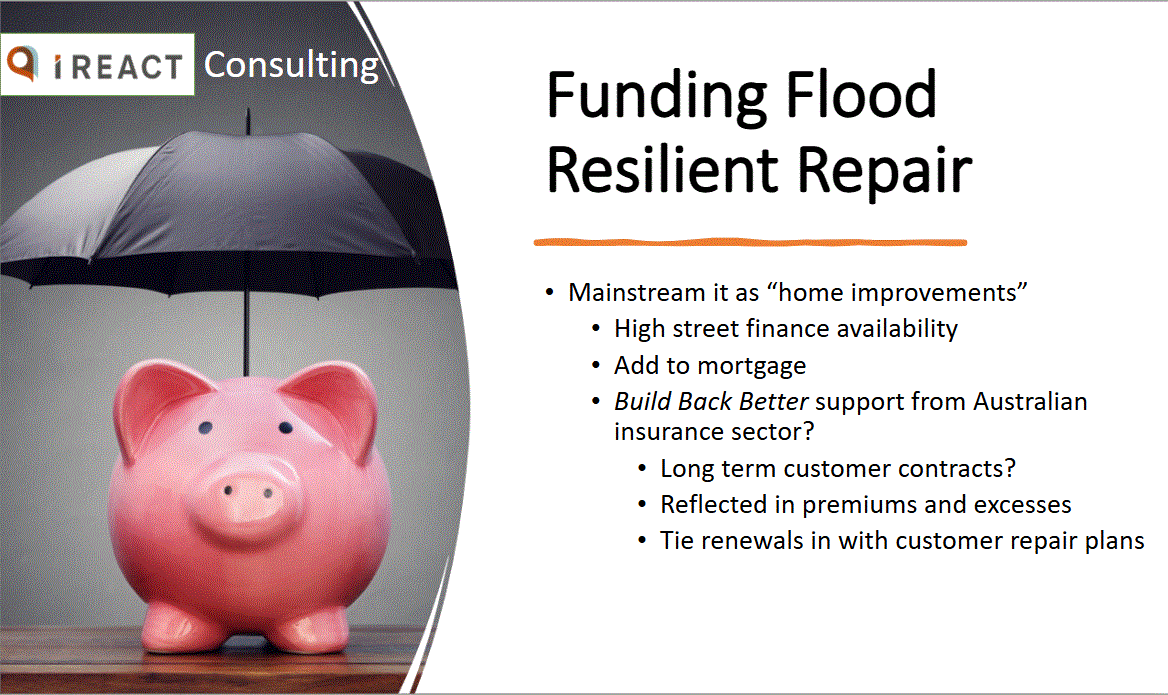
Flood insurance costs have skyrocketed in many parts of Australia — particularly in Queensland and Northern NSW. Some businesses are struggling to get affordable cover at all.
Flood mitigation experts can help here, too. They prepare detailed reports that show insurers exactly what measures are in place to reduce your risk. In many cases, this kind of documented evidence can support a review of your premium or help you access coverage that wouldn’t otherwise be available.
Planning for When a Flood Does Happen
Even the best mitigation can’t prevent every flood. So your consultant will also help you prepare a flood emergency plan — a practical document that answers questions like:
- At what point do we start moving stock and equipment?
- Which staff are responsible for what, and how do we communicate?
- What’s our evacuation route, and where do we go?
- How do we get back up and running as fast as possible afterwards?
This kind of planning is aligned with what your local State Emergency Service (SES) expects, which matters when it comes to getting help quickly if things go wrong.

Why Does This Matter So Much for Australian Businesses Right Now?
- Floods Are Getting Worse
Australia’s climate is changing, and the evidence is clear — extreme rainfall events are becoming more frequent and more intense. The Bureau of Meteorology and CSIRO have both confirmed this trend.
What this means practically is that historical flood patterns may no longer be a reliable guide to future risk. A flood that used to feel like a rare event might now happen much more regularly. Flood mitigation experts factor this into their assessments, so the solutions they recommend are built to hold up not just today, but in the decades ahead.
- The Rules Have Tightened
Following the 2022 floods — the worst in living memory for many communities — state governments across Australia updated their flood planning rules. NSW overhauled its flood management framework in 2023. Queensland and Victoria both strengthened their planning policies. South Australia released a new flood hazard plan in 2024.
What this means for businesses is simple: councils are asking more questions, requiring more documentation, and holding developments to a higher standard than they did five years ago. Having a qualified flood mitigation consultant in your corner makes this process significantly smoother.
- Insurance Is Getting Expensive
If you’ve noticed your flood insurance premiums climbing, you’re not alone. In some high-risk areas of Queensland, premiums have doubled or more over the past decade. And in certain flood zones, some insurers have pulled out of the market entirely.
Documented flood mitigation work gives insurers something concrete to assess. It can be the difference between affordable coverage and none at all.
- The Cost of Doing Nothing Is High
The financial damage from flooding is obvious — damaged stock, broken equipment, repairs, and lost trading days. But the less visible costs add up too: customers who move on while you’re closed, staff who don’t come back, and the long-term reputational hit of a business that struggled to recover.
Businesses with a proper flood mitigation plan consistently bounce back faster. That’s not just common sense — it’s what the data shows.
Which Types of Businesses Should Think About This?
Honestly, more businesses than you’d think. Flood risk isn’t just about being next to a river.
Here are some of the businesses most likely to benefit from engaging flood mitigation specialists:
- Retail and hospitality — Especially ground-floor premises in town centres, coastal strips, or areas with a history of flooding
- Manufacturers and warehouses — Large sites with expensive plant and equipment, where even a small amount of water can cause enormous damage
- Farmers and agribusinesses — Properties on floodplains or near river systems, where flooding can wipe out a season’s worth of work
- Developers and builders — Anyone planning to develop land with a flood overlay or near a waterway
- Healthcare providers — Clinics, aged care facilities, and medical centres where continuity of operations is critical
- Local councils — Responsible for flood-prone infrastructure, roads, and community facilities
- Any business with a complex supply chain — Even if your premises are safe, flooding can shut down your suppliers, your transport routes, or your staff’s ability to get to work
How to Choose the Right Flood Mitigation Consultant
Not all consultants are equal, so here’s what to look for:
Proper qualifications. Look for engineers with relevant qualifications and membership in Engineers Australia. A Chartered Professional Engineer (CPEng) has demonstrated a high level of competence and is held to a professional code of conduct.
Australian experience. Flood planning rules vary significantly from state to state and even from council to council. Make sure your consultant has real experience working in your state — ideally in your specific region.
A track record you can verify. Ask for examples of past work. A good flood mitigation expert should be able to point to assessments that were accepted by councils, or mitigation projects that delivered real results. Ask for references from similar clients.
Someone who explains things clearly. This is actually important. A good consultant can take complex concepts and explain them in a way that makes sense to you. If you come out of the first meeting more confused than when you went in, that’s a red flag.
End-to-end capability. You want someone who can take you from the initial assessment all the way through to a working solution — not just someone who produces a report and leaves you to figure out the rest.
What to Expect When You Engage a Flood Mitigation Consultant
Here’s how a typical engagement unfolds:
Step 1 — Getting to Know Your Situation
Your consultant starts by understanding your business, your site, and your concerns. They’ll look at existing council flood maps, your property history, and any previous flood reports.
Step 2 — Assessing the Risk
Using recognised Australian methods, they work out what flood scenarios your property could face — how deep the water might get, how often it could happen, and which parts of your site are most exposed.
Step 3 — Showing You the Picture
You’ll see clear, practical information about your flood risk — not a wall of technical jargon, but a clear explanation of what your exposure looks like and what it means for your business.
Step 4 — Building a Plan
Your consultant develops a flood management plan tailored to your situation — with options, costs, and priorities laid out so you can make informed decisions about what to do and when.
Step 5 — Handling the Paperwork
If council approvals or planning submissions are needed, your consultant prepares and lodges them and manages the back-and-forth with authorities.
Step 6 — Getting Solutions Built
Where physical works are needed, your consultant supports the construction process to make sure what gets built actually matches what was planned.
Step 7 — Keeping You Ready
After the work is done, they help integrate your flood management measures with your emergency planning — so your team knows exactly what to do when the next flood warning comes through.
Common Questions Australian Business Owners Ask
- Do I actually need a flood mitigation consultant, or can I handle this myself?
For basic awareness, you can get a lot of information from your local council and the Bureau of Meteorology. But if you’re making decisions about building, developing, or significantly investing in flood-prone property — or if you’re trying to reduce your insurance costs — a qualified professional is worth every cent. - Will this just lead to a report I put in a drawer and never look at?
A good flood mitigation consultant won’t let that happen. The goal is practical outcomes — measures that actually reduce your risk — not paperwork for its own sake. - How much does it cost?
It varies quite a bit depending on the size and complexity of your site. A straightforward assessment for a single commercial property might cost a few thousand dollars. A more involved engagement for a large site or development project will cost more. Either way, it’s almost always far less than what a bad flood would cost you. - How long does it take?
A basic risk assessment usually takes a few weeks. A more comprehensive engagement — including council submissions and physical works — can take several months. The sooner you start, the better. - Is it a legal requirement?
For many development applications in flood-prone areas — particularly in NSW, Queensland, and Victoria — a flood impact assessment is required by the council before they’ll approve your application. Even where it’s not legally required, most business owners who’ve been through a serious flood wish they’d done it earlier.
Flooding isn’t something that happens to other people’s businesses. It’s a real, growing risk across Australia — and the businesses that fare best are the ones that took it seriously before the water arrived.
Flood mitigation consultants, flood mitigation specialists, and flood mitigation experts exist precisely to help you do that. They take the complexity out of flood risk — the technical assessments, the planning rules, the engineering decisions — and turn it into a clear, practical plan your business can actually act on.
Whether you’ve already had a flood scare or you’re simply thinking ahead, there’s no better time to get a professional in your corner.
John works with Australian businesses to assess flood risk, develop practical mitigation strategies, and navigate the planning and compliance requirements that come with operating in flood-prone areas. Our team of experienced flood mitigation specialists is here to make the process straightforward — from the first conversation to the final solution.