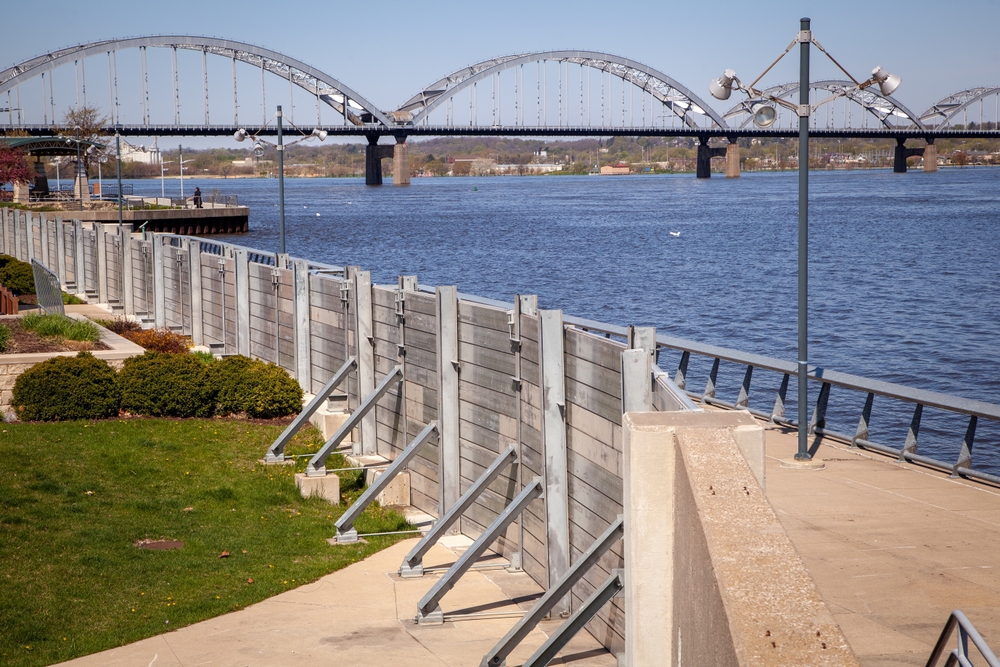
Most organisations only think about flood mitigation after a near miss, a premium hike, or a major loss. And when they do act, the instinct is to buy the cheapest, most visible “solution” — usually a barrier.
The problem is simple: Cheap fixes fail. Failed fixes cost more. And insurers are no longer tolerating guesswork.
That’s where specialist input changes the outcome.
Flood mitigation isn’t a product — it’s a system
At the property level, everything still comes back to the fundamentals: elevation, dryproofing, wetproofing, and — where possible — avoidance. But these only work when applied in the right order, with a proper understanding of:
- the building
- the curtilage
- the drainage network
- the catchment
- the flood pathways
- the recovery requirements
A barrier company won’t do this. A specialist will.
What stakeholders actually gain when they bring in a specialist
1. Money saved, not money spent
The biggest cost in flood mitigation is not consultancy — it’s getting it wrong. Misdiagnosed flood type, wrong product, poor installation, no recovery plan — these are the things that lead to sixfigure reinstatement bills and insurance disputes.
2. Insurable outcomes, not hopeful ones
Across 3,000+ projects, every assistance related to Flood Solutions Australia I’ve delivered has been designed to an insurable standard. If insurers won’t accept it, it isn’t mitigation — it’s a liability.
3. A wholeofproperty strategy, not a catalogue of products
I assess every pathway water can take: overland, below ground, through walls, through floors, through drainage, and through shared services. This is the difference between “protected” and “actually resilient”.
4. Correct diagnosis of the flood type
Groundwater, sewer surcharge, overland flow, flash flooding — each requires a different approach. Get this wrong and the entire investment is wasted.
5. Faster, cheaper recovery when the water does get in
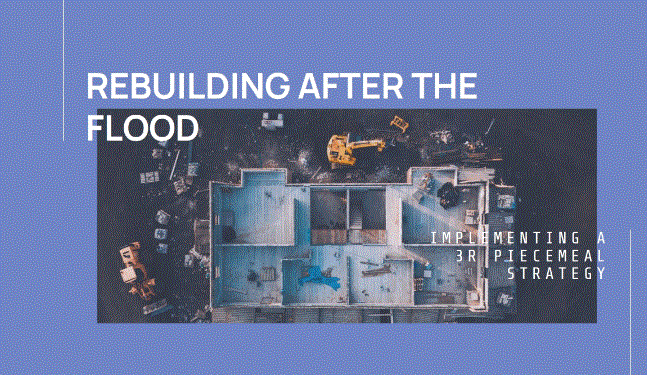
Sometimes the safest option is controlled ingress with a resilient interior. That’s where FloodRecover3R provides a structured pathway for rapid reinstatement.
6. Clear operational planning
FERPS gives owners, managers, and operators a practical, sitespecific plan for what to do before, during, and after a flood. Not a generic template — a usable plan.
Why this matters to every stakeholder
Property owners & developers
Avoid uninsurable deadends and protect asset value.
Insurers & brokers
Get clear evidence of risk reduction and a defensible recovery pathway.
Councils & government
Achieve credible, scalable resilience aligned with NBS and WUSD/SUDS.
Strata & facilities managers
Reduce downtime, protect common property, and avoid liability exposure.
Retailers & product partners
Integrate products into a wider, insurable framework — not a oneoff sale.
Utilities, industrial sites & critical infrastructure
Protect operations, reduce reinstatement costs, and maintain continuity.
The Property Flood Certificate (PFC)
To close the loop, the PFC provides a transparent, auditable record of the mitigation measures installed and the standards achieved. It gives insurers, lenders, owners, committees, and regulators the evidence they need — and removes the guesswork that leads to disputes.
If you want to avoid wasted spend, insurance disputes, and operational downtime, get in touch
Flood mitigation isn’t expensive. Getting it wrong is.
If you want a solution that stands up to water, scrutiny, and underwriting, and not just marketing claims, then along with Flood Barriers Australia I’m here to help.